In the last several years, people have changed a lot in how they hunt for information online. In the past, people would type in a few words into a search engine like Google and then click on a list of links. A lot of people use voice search, conversational questions, and even apps powered by AI to get answers without having to travel to a website. According to AI SEO in 2025, the top three disruptions in SEO performance are expected from Generative AI, Google E-E-A-T, and zero-click searches.
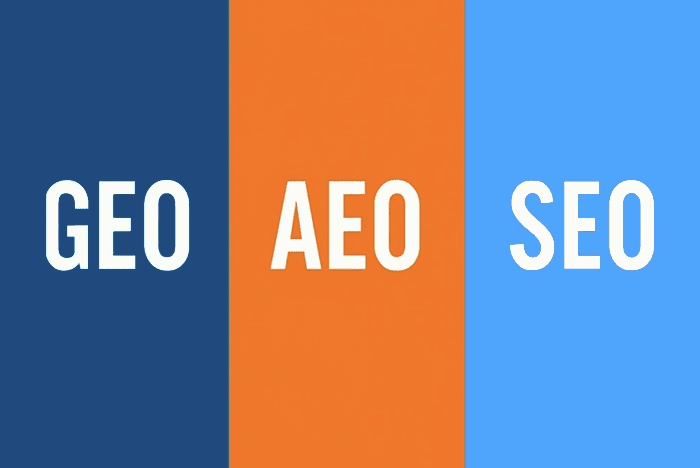
Because of this shift, anyone who wants to be seen online now needs to apply three optimization methods:
- Search Engine Optimization, or SEO
- Answer Engine Optimization (AEO)
- GEO is short for Generative Engine Optimization.
Let’s talk about what each one means, how they are different, and why marketers should care.
The Three Key Optimization Methods You Need Today
-
SEO (Search Engine Optimization)
SEO, or search engine optimization, is the act of improving a website so that it appears higher on search engine results pages (SERPs). It helps search engines understand what your content is about and when to show it to users.
How SEO Works
SEO includes:
Using words that your audience is likely to look for, writing things that are useful and easy to read
Making sure your website loads quickly and is easy to use, getting links from other websites that you trust
Google and other search engines use these and other methods to determine if your site is useful and trustworthy. The goal of SEO is to get your pages to show up in search results without having to pay for ads. AEO and GEO optimization agencies like Nine Peaks Media will strategically implement SEO and AI optimization strategies focusing on search intent, technical clarity, and high-quality content that aligns with how people actually search on Google and LLMs.
Why SEO is Still Important
Even though new technologies are changing how searches function, people still use conventional search engines a lot. SEO is still the most crucial thing for firms that wish to attract traffic on a daily basis.
-
Answer Engine Optimization (AEO)
Answer Engine Optimization is all about improving information so that search and voice systems can receive straight answers and send them to users, usually without the need to click through.
The purpose of SEO is to rank pages, while the goal of AEO is to make your content the answer that pops up when someone asks a question.
How AEO Works
Here are some things that are excellent for AEO:
- Written in a way that makes it easy to ask and answer questions
- Brief and to the point on crucial matters
- Organized with headings and bullet points
- Forms like the FAQ schema can be used to tag
This kind of content makes it a lot easier for Google’s AI Overview, voice assistants, and other AI tools to use as on-page replies.
For example,
The answer engine can give a direct definition at the top of the results if someone types “What is AEO?” into a search engine. The user can see your answer immediately instead of needing to click through.
AEO is great for visibility because:
- A lot of the time, consumers get answers without clicking.
- Voice search and smart assistants help get people’s attention.
-
Improving the Generative Engine (GEO)
Generative Engine Optimization is a new concept that wants to make it easier for generative AI tools like chatbots and AI answer systems that hire large language models to understand, summarize, and give out material.
SEO and AEO are focused on how people find and click on links. GEO is based on how AI systems show your content in their answers.
How GEO Works
Large language models (LLMs) and other generative engines come up with answers by:
- Getting what the user wants
- Looking for information that suits the context and the purpose
- Putting together knowledge from many places
- Content that is optimized for GEO usually:
- Be clear and tidy
- Speak in daily terms
- Give information that is true
- Add sections and definitions that are easy to find.
GEO’s goal is to make it easy for AI systems to use your information when they answer a query instead of just sending you a webpage.
Why GEO Is Important
As more people use AI chat assistants and conversational search, being mentioned in the answer itself may be more helpful than being at the top of search results.
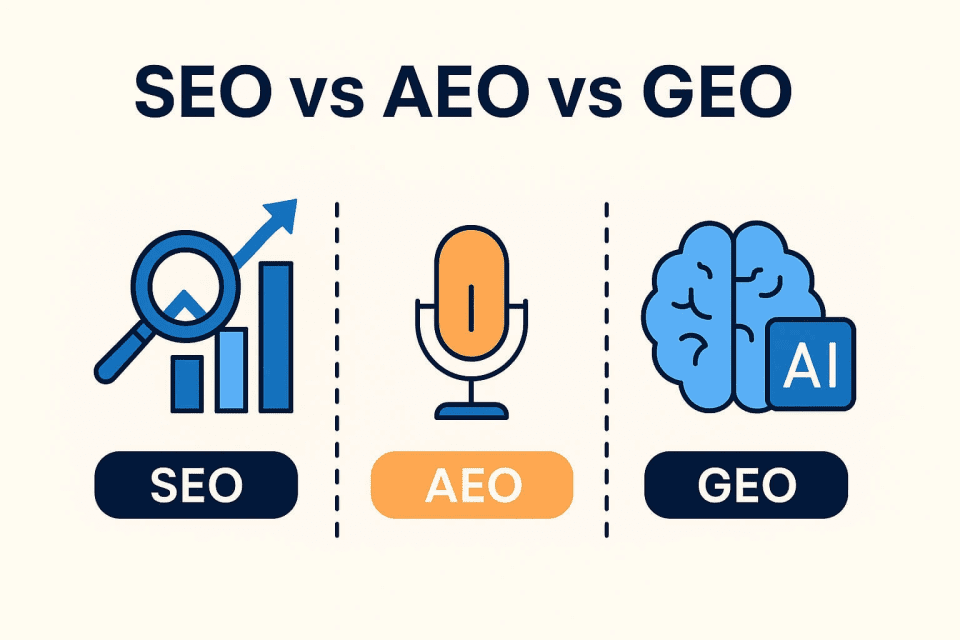
How SEO, AEO, and GEO Work Together
Even though these optimization strategies all have different goals, they work best when utilized together:
- SEO helps people locate your website on search engines like Google.
- AEO lets your content be a straight answer on search and voice platforms.
- GEO increases the chances that your knowledge will be used and cited in AI-generated solutions.
They don’t take the place of each other in today’s changing search industry; they function well together.
Why This Matters to Marketers
For businesses and people that create content, recognizing these three optimizations means:
- Your material can be found directly in the answers.
- You can still get in touch with people even if they don’t click on links.
- You are still significant when search moves beyond regular SERPs.
- You offer both people and AI systems power.
The Future of Search Beyond Traditional SERPs
In 2025 and beyond, having a high-ranking link isn’t enough to be visible. It implies being the answer, the source, and the reference.
There used to be about ten blue links in search. It’s all about talking and obtaining answers now. These days, you need to accomplish the following to do well online:
- Use SEO to make sure you show up in regular searches.
- Use AEO to make sure that your content is the first thing people see.
- Use GEO to help AI algorithms identify and summarize your material quickly.
These three things will help you be seen and trusted if someone is looking for you on Google, asking a voice assistant, or talking to an AI.
Use SEO for Traditional Search Visibility
Traditional SEO is still important because it helps search engines find your site and figure out what it’s about. People may never find your stuff if you don’t have it. But SEO isn’t enough by itself anymore. People expect quick, clear answers increasingly, and search engines are designed to provide them with those answers as quickly as possible.
Use AEO for Direct Answers
It helps to use Answer Engine Optimization. AEO shifts the focus from ranking pages to offering answers immediately away. It offers points to content that is helpful, clear, and well-organized. If your content can clearly answer a user’s question, it has a much better chance of being viewed, even if they never click through to your site.
Use GEO for AI-Driven Summaries
In this phase, Generative Engine Optimization goes even further. As AI-powered technologies grow more common, robots don’t merely read things; they also interpret them, summarize them, and use them again. GEO checks that your material is clear, correct, and trustworthy enough for these systems to use as a source. For many people, being mentioned or summed up by an AI tool is just as helpful as being at the top of a traditional search page. To understand this shift in depth, explore our ultimate guide to GEO article.
Conclusion: Adapting to the New Search Landscape
This means that marketers and businesses need to modify the way they generate content. Content needs to accomplish more than just write for clicks or algorithms:
When you answer serious questions, be clear. Make it simple for both people and robots to understand.
Give information that is true and simple to understand. Over time, build trust and authority. In the future of search, you won’t have to pick between SEO, AEO, or GEO. It’s about leveraging all three to find people, no matter where or how they look. As search changes, brands who get this change early will be better equipped to be seen, relevant, and trusted.