AEO vs SEO Understanding the New Path to Top AI Rankings
-
Jitesh Keswani
- Published on: Dec 11, 2025
- Last Updated: Dec 16, 2025
- 9 min read
- | AI Overview
- | AI Search





Most brands didn’t think search behavior would change this quickly. For a long time, the main focus was on traditional SEO, which was mostly about getting web pages to rank well in search engines. Today, search is moving toward conversations made by advanced systems that give direct answers instead of long lists of links. Answer Engine Optimization, or AEO, is a new way of doing things that is needed in this new environment. Companies that want to stay visible need to know how these new systems collect data and how to arrange their content so that it is chosen as the best answer.
AI-powered search engines use deep learning and large language models to give answers that sound like a conversation with a real person. In this setting, the older ranking signals are still useful, but they are no longer the only ones that make decisions. AEO’s goal is to help brands make content that these systems see as authoritative and full of context. It also fits in very well with GEO strategy development, which is becoming an important part of planning for businesses that work in areas with a lot of different search patterns. GEO strategy development makes local intent clearer, which makes AEO more accurate and useful.
How AI Search Engines Read and Choose Data
First, we need to look at how new systems read content to see the difference between AEO and SEO. Search engines like Google and Bing crawl and index pages, then use algorithms to choose which links to show. AI systems go even further. They use modeling in real time to summarize whole groups of content. This makes what we call AI-generated search results, which are written in a conversational style. These AI-generated search results are more direct, which means that the content behind them must also be direct.
The new environment puts a lot of emphasis on message consistency, clear structure, and trust signals. These answers often don’t show up for pages that don’t have clear explanations or have parts that are hard to understand. To get better results, brands need to think about how a person reads information, since that’s how advanced systems read it too.
What Has Changed Between AEO and SEO
SEO is all about being seen on search pages. AEO’s main goal is to be chosen as the answer in generative search performance outputs. Generative search performance shows how well a brand is shown in the new conversational interfaces. When a system makes a summary or an answer, it uses detailed interpretation. That way of ranking is more sensitive to the quality of the content than other ways.
The second big change is mapping intent. SEO has always used keywords and backlinks to figure out how relevant something is. AEO looks at the depth and meaning of a topic to see if the content can stand on its own as a good answer. This is why brands that use AEO now work closely with AI visibility optimization services. These AI visibility optimization services tell you where your content isn’t working and where it needs to be changed in a bigger way.
Why AEO is Important for Today’s Brands
Search journeys are different now. Users want explanations that are quicker, and they don’t want to have to click on a lot of links anymore. They want to know everything right away. This new behavior changes how brands define success. Brands no longer compete for ten spots on a page; instead, they compete for the first response to a conversation. There is a better chance of being seen, but only if the content has been set up to work with these advanced systems.
AEO also makes content’s return on investment (ROI) better in the long run. Strong answer-based structures usually work well in a lot of different formats. They quickly adjust to changes in algorithms and draw in a more interested audience. This is where GEO strategy development is very important because the way people in different regions act affects how these audiences phrase things and what they expect. GEO strategy development makes sure that content naturally fits with each group of people while also meeting the needs of AI-driven systems.
Things You Need to Do to Rank in AI Search
To rank in AI search, you need a mix of clarity, authority, and structural predictability. The following things help brands fit in with these new systems.
Make content that is ready to answer
You should write every topic as if someone will read it aloud. AI systems like answers that sound full when you say them. Short blocks, subtle transitions, and layered clarity help make this happen. Brands need to look over their old content and change it to fit how people naturally talk.
Make the context deeper
Explanations that only touch the surface don’t work anymore. Generative systems favor content that provides examples of reasoning and relevant context. This is why generative search works much better when content has conversational transitions or explains why an idea is important. The system will confidently use information in its answers when it is rich and makes sense.
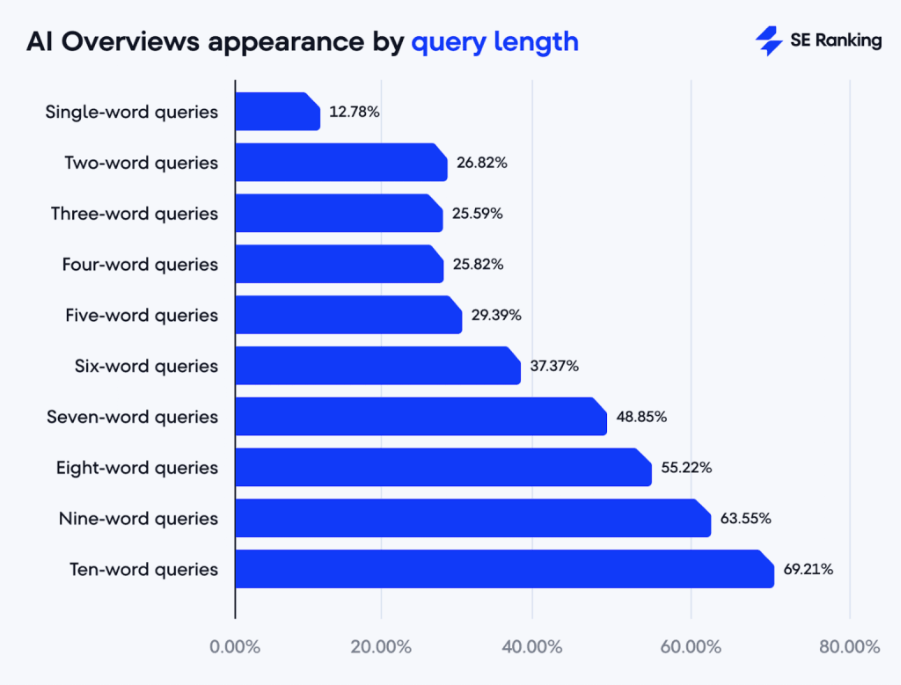
AI Overviews appear far more often in longer, more specific searches. Short queries show low visibility, with single word queries at 12.78 percent and three word queries around 25 percent. The numbers climb as intent becomes clearer, reaching 48.85 percent for seven word queries and peaking at 69.21 percent for ten word queries. This shows AI results are heavily triggered by detailed, multi word queries. (SERanking)
Make authority signs stronger
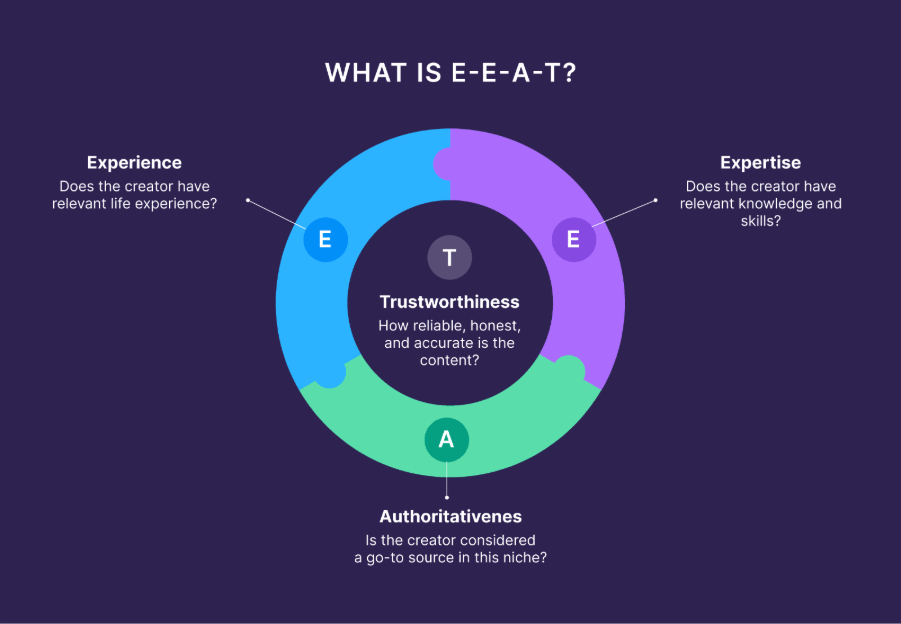
Content must show that it can be trusted by using expert references, real-life examples, and clear explanations. Backlinks are still important, but real authority now comes from being clear and consistent. Good structure shows that you can be trusted and makes it more likely that AI will include you in search results.
Use formatting that is structured
Headings, lists, and clear sections make it easier for both people and computers to find their way around information. The goal is to give the flow a predictable structure without getting in the way. Clear sections also help AI visibility optimization services do their jobs better because these services find out where systems have trouble understanding content.
Make sure the conversation flows well
A lot of the time, AI search results depend on how people talk. To do this, you need to get rid of any extra complexity and write in a way that sounds friendly. It also suggests using natural connectors instead of putting keywords in a mechanical way.
The Importance of Data and Ongoing Monitoring
AEO is not something you do once. It needs to be watched like SEO, but with a bigger focus on behavioral signals. Brands need to look at how often their content shows up in AI responses and whether those responses match what they want to say. This is where generative search performance metrics come in handy. Generative search performance can tell you if the system picks your content and how well it matches your story.
AI visibility optimization services also make continuous monitoring better. These services look for gaps, find problems with how things are understood, and suggest the best changes to make next. As these systems get better over time, they make sure the content stays in line with new models.
Best Ways to Keep AEO Successful
Companies that want to do better in AI-driven environments should focus on the following things.
- Go over all the content to make sure it’s ready to be answered, and rewrite any parts that aren’t clear.
- Add more depth to the topics and include expert insight to back it up.
- Keep the conversation going while still being clear and professional.
- Use analytics to see how content shows up in new search interfaces.
- Make sure that planning and GEO strategy development are in sync with how people act.
- Work with AI visibility optimization services for more advanced help.
These steps build a base that AI systems can trust. This trust builds over time, making things more visible and helping people choose the same thing every time they talk.
In the end
AEO is not just a fad. It changes the way people find information and the way brands get noticed for good. SEO that has been around for a long time is still important, but it doesn’t work alone anymore. How well your content does in new conversational settings is what matters now. Brands that put money into strategic planning, restructuring content, and ongoing optimization early on will have a clear edge.
Getting ready well helps your content become the most popular answer. People trust your brand more quickly and deeply when they get something useful right away from the information you give them. Businesses can do well in a search landscape that is always changing if they have a good plan for AEO and follow the right optimization practices.
FAQs
- What is Answer Engine Optimization (AEO) and how is it different from SEO?
Answer Engine Optimization (AEO) focuses on structuring content so AI-powered search systems can select it as a direct, conversational answer. Traditional SEO aims to rank pages in search results, while AEO aims to be the response given by generative search engines in AI overviews and chat-based queries.
- Why is AEO becoming important as search behavior changes?
Search behavior has shifted toward conversational queries where users expect immediate, complete answers. AI-powered search engines generate summaries instead of showing link lists, which means brands must optimize content to be trusted, clear, and context-rich enough to be chosen as the answer.
- How do AI search engines decide which content to use in their answers?
AI search engines analyze content using large language models that evaluate clarity, structure, topical depth, and trust signals. Rather than relying only on keywords and backlinks, these systems prioritize content that explains topics naturally, matches user intent, and provides consistent, well-organized information.
- What role does GEO strategy development play in AEO?
GEO strategy development helps align content with regional language patterns, local intent, and location-specific search behavior. When combined with AEO, GEO strategies improve the accuracy of AI-generated answers by making content more relevant to how users phrase questions in different regions.
- How can brands optimize content to perform better in AI-generated search results?
Brands should focus on writing answer-ready content with clear structure, natural conversational flow, and strong authority signals. Adding deeper context, using clear headings, monitoring generative search performance, and working with AI visibility optimization services can significantly improve inclusion in AI search responses.