Key Takeaways
- There are best practices in the field of technical SEO, content development, and AI visibility that can help you deliver results much higher than a normal SEO checklist.
- There are other items like Core Web Vitals, internal links, and search intent alignment that should be performed in conjunction, not one at a time.
- Increasingly, SEO today requires that AI search optimization services be included as well. ChatGPT, Perplexity, etc., are now giving live clicks.
Introduction
We recently saw a case study from SEO Help Guide that described how organic traffic to a client increased by 127% in one night. The advanced SEO fixes discussed in this blog work together to improve search visibility, strengthen your website, and help your target audience find you in search results. As search continues to evolve, these SEO fundamentals can also support generative engine optimization services by making your website easier search and AI systems to understand. Many of our current clients at e intelligence are already using a number of these techniques. The following 12 fixes give you a solid starting point.
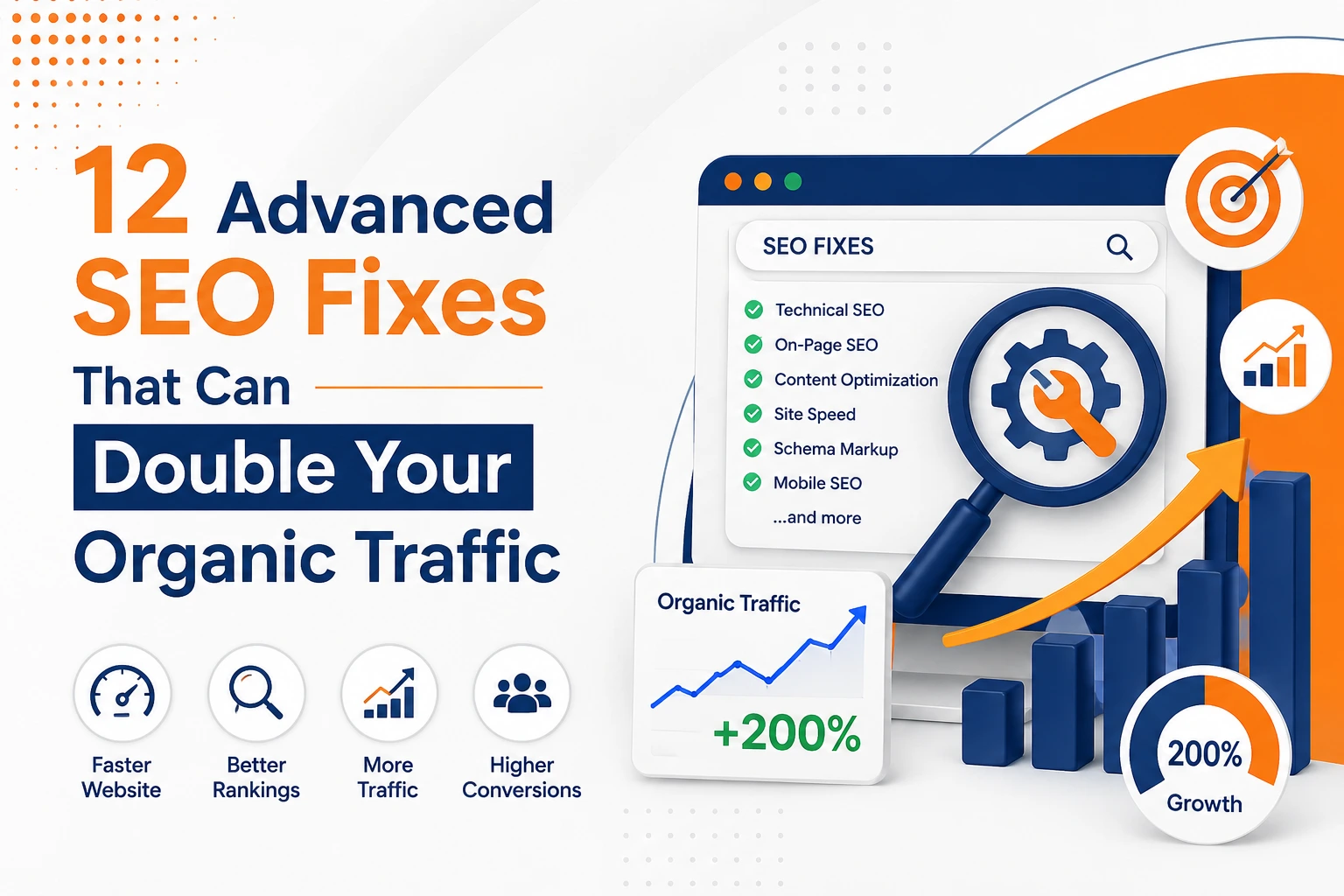
Given below are 12 advanced SEO techniques that can serve as a foundation to get you started on your path to advanced SEO techniques for search engine optimization and optimizing your website for search engines.
 1. Fix Your Core Web Vitals Properly
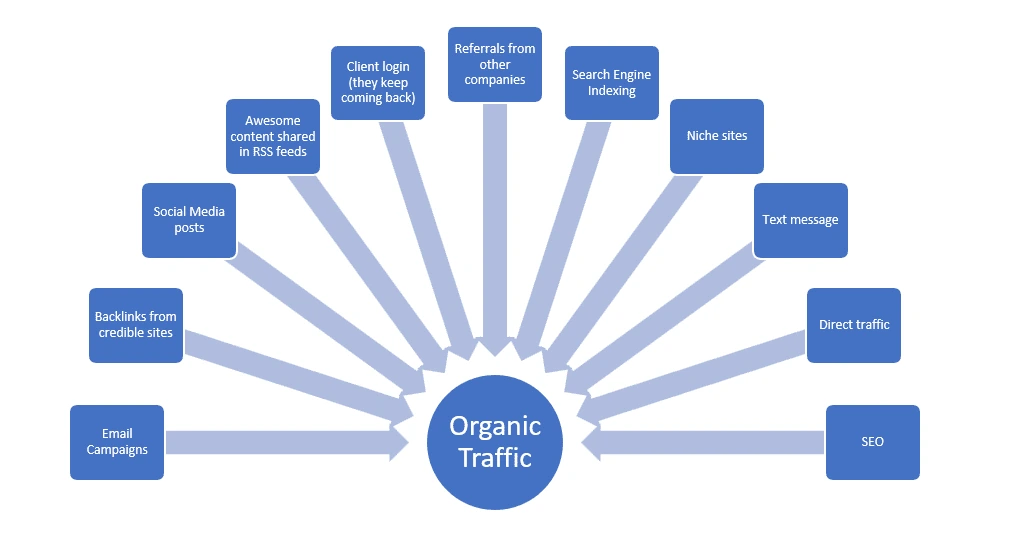
What actually matters is how your site performs for real users, not just whether it passes a lab test. You should monitor three key Core Web Vitals: Largest Contentful Paint (LCP), Cumulative Layout Shift (CLS), and Interaction to Next Paint (INP), as these help measure loading performance, visual stability, and responsiveness. Check them using real Chrome User Experience data alongside other performance tools. A technically strong website can also provide a better foundation for an effective generative engine optimization agency strategy by making your content easier for users and search systems to access and understand.
2. Clean Up Duplicate and Thin Content
So instead of having a huge number of pages that don’t get any backlinks and have high bounce rates, you could have a huge number of pages that have backlinks and have really low bounce rates, thus positively affecting your domain.
3. Build Topic Clusters Around One Pillar Page
Advanced SEO practices include organizing a large amount of content within a topic into a series of Topic Clusters. A Topic Cluster consists of a series of Category Pages that claim a specific category of keywords as their own, and which also contain a Pillar Page or two. A Pillar Page is an in-depth, long-form article that contains a large amount of information on a single topic, such as organizing a topic into Topic Clusters, and building a topic cluster helps every article in that category rank better over time.
4. Match Content Format to What Is Already Ranking
Before you start with anything, check out the top 5 results for your target keyword before you start writing. Are they listicles, in-depth guides, or comparison pages? What questions are they trying to answer? Then write a version of that that is already ranking, fill in the gaps, and add something that the competition is missing.
5. Fix Crawl Budget Waste
Canonical tags in the code of your website and in your robots.txt file will ensure that search engines don’t waste too much crawl budget on near-duplicate pages of yours. This will make sure the most important pages of yours get indexed quickly.
6. Add Schema Markup Everywhere It Fits
For example, Article, FAQ, How To, and Review schema markup can help to explain what content is contained within web pages. Most advanced SEO services will include the addition of such markup as standard. Can you see how your markup is being recognized?
7. Rewrite Titles Based on Impressions Data
Open Search Console and look at the pages with lots of impressions. On each of these pages, check the click-through-rate. If the click-through-rate is poor, then possibly the title of the page needs to be rewritten. Try rewriting the title to start with a number, a question, or even just the year of publication. Measure the click-through-rate over the following 30 days to see if it has done any good.
8. Strengthen Internal Links Early in the Page
Early on the page, including internal links. By placing links to relevant pages on your site early in the first two paragraphs of a new article, you can decrease the bounce rate of your site and allow your readers to read more articles on your site, which can also help to distribute ranking strength from your best articles to your newer articles that are in a similar cluster.
9. Earn Links Through Real Digital PR
For instance, instead of sending out a bunch of link blasts (e.g., the typical “guest post” campaign), create something that people would want to link to (e.g., a piece of original research, a data study, a tool, etc.). Then, go out and ask for links (from journalists and bloggers in your niche, for example). Remember, one link from a relevant and trusted site can be worth so many more than 50 random links. This type of digital PR is something that advanced SEO services teams use to create effective outreach campaigns.
10. Reclaim Unlinked Brand Mentions
People online talk about your brand but haven’t linked to your site or business yet. Just contact them and politely ask for a link. Since the writer already knows and trusts your brand, this kind of outreach converts surprisingly well.
11. Optimize for AI Search and LLM Citations
Run your target keywords through ChatGPT, Claude, and Perplexity to see which sources get cited the most. Given your goal is to become the 6th most cited source or to replace one of the current 5 most cited sources, you should write direct and self-contained answers under each heading. This is where AI Search Optimization services come into play in a serious SEO plan.
12. Track Behavior Signals, Not Just Rankings
We also look at other behavior signals to verify your ranking in search results. These include click-through rate, time on site, and pogo-sticking to search results. Opening lines of your articles should clearly and immediately indicate to the reader that they are on the right page.
Final Thoughts
Doubling organic traffic isn’t a single tactic to greatly increase traffic. Doubling organic traffic typically means choosing 3-4 methods from the typical list of 12 ways to greatly increase traffic in order to attack the single biggest gap and start to see a compounding effect as each method interacts with the others in order to create the biggest jump in traffic.