Key Takeaways
- By using white label web development, you can offer your clients web development services without even having one in-house developer to work on the projects.
- The global white-label market is forecasted to reach $99.19 billion by 2026 (source: Demand Local). The white-label marketplace is evolving rapidly, and it is no surprise that many online marketing agencies are beginning to adopt this successful business model for their web development projects.
- Clear pricing, a defined process, and a support retainer are what turn a single white-label project into consistent repeat income for you.
Introduction
Growing up your digital agency is about more than just finding new clients to sign up to your agency. You also need to ensure that you have the resources available to deliver all of the projects you take on. A busy in-house team is not able to take on any more website projects.
Of course, hiring full-time developers looks easy at first glance. However, there are many more costs apart from their salaries, like recruitment fees, training, tools, and many more ongoing expenses.
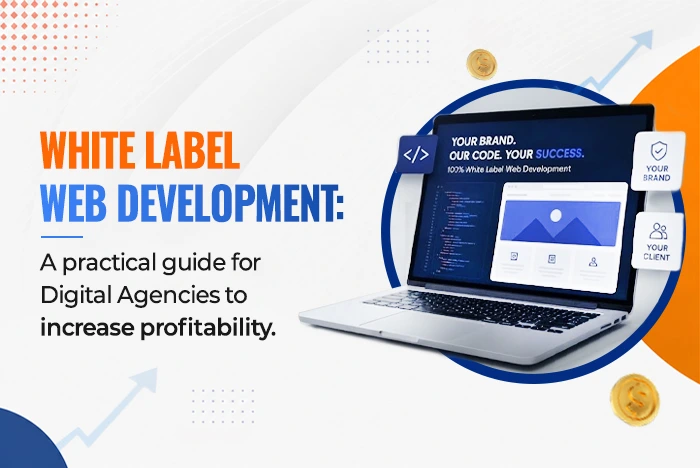
An alternative way to grow your digital agency while ensuring it has the necessary resources to deliver all the websites it takes on is to use white label web development. You outsource the design, development, testing, and technical work to a development partner and then sell it on to your clients while retaining control of the client.
In this guide, we will outline the process of how White Label Web Development works and how you can make money from it.
What White Label Web Development Actually Means?
To set up a white label web development project, you partner with a white label web development agency to develop the website(s) for your client, and you stay the single point of contact with your client, while the white label web development agency handles all the design, coding, and QA.
A white-label web development agency is not a random freelancer on a website such as Upwork or Freelancer. They will work as an extension to your own company and will follow your specific processes and procedures and work to strict timelines to meet your delivery promises.
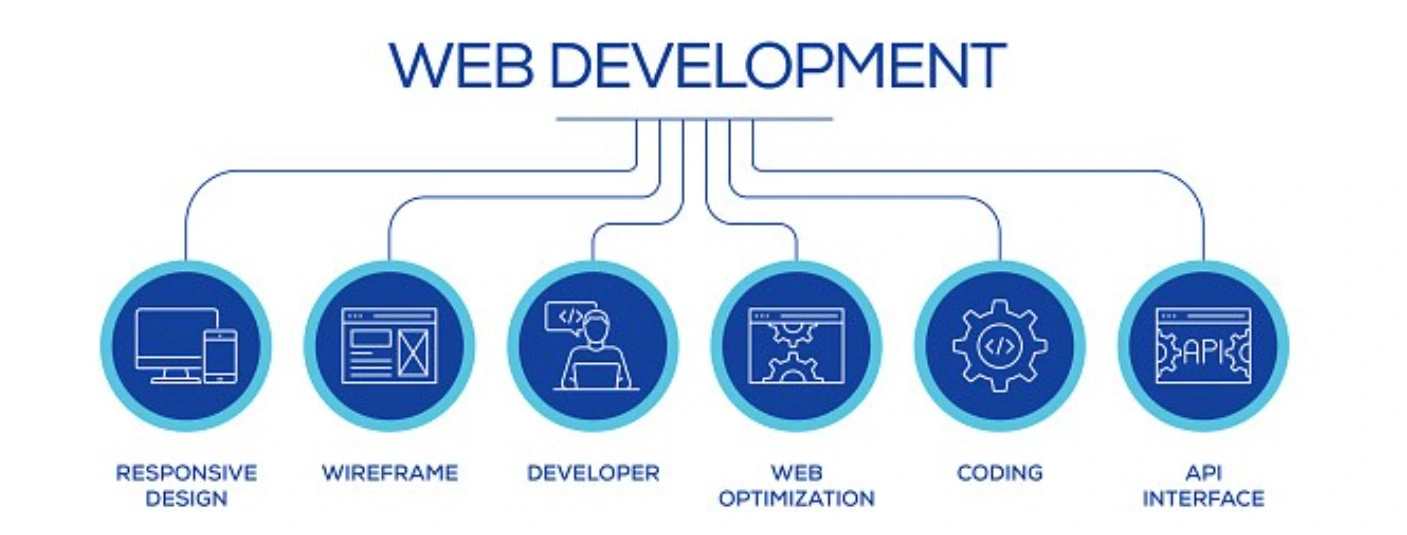
The Real Bottleneck Is Capacity, Not Demand
When a new project comes in from sales, everyone gets excited for a few days, until the project goes into your queue as your single developer is already working on 3 other sites for you.
While hiring a full-time employee might seem like the best way to solve your problem in the short-term, there are several problems. First, it will cost you a lot of money in payroll. Then there is the problem of training and getting your new employee up to speed on your systems. But perhaps the biggest problem of all is getting your new employee to possess the exact skills that you will need for your next 5 projects.
This model gives you a full bench of designers, developers, and project managers that you can use on demand, without paying them when you don’t need them. In slow periods, you don’t have to keep paying for your idle staff, and in busy periods, you can take on all the work that comes your way.
Here’s how the three options stacks up side by side:
|
Factor |
White Label | Hiring In-House |
Freelancers |
| Speed to start | Immediate | Slow (weeks to months) | Medium |
| Cost | Predictable, per project | Fixed salary + overhead | Unpredictable |
| Scales up or down | Yes | No | Sometimes |
| Quality control | Structured QA | Depends on team | Inconsistent |
How to Sell White Label Development Without Losing Client Trust?
This model is relatively easy to sell. Most agencies simply state that clients will work with them directly (just as always) and that there is a larger production team behind the scenes. The typical timeline for their typical projects therefore remains intact.
That line does a lot of heavy lifting in terms of alleviating concern. It’s honest, it’s concise, and addresses the concern every potential client has anyway: Will this get done on time?
To charge fair value to price-sensitive clients, we suggest framing our charges in terms of efficiency rather than low cost. For results-driven clients, we suggest emphasizing performance, speed, and structure. Clients that have suffered poor experiences with previous agencies should be assured of our transparency with staging links, regular updates, and clear milestones for all work that we do.
Pricing White Label Projects So You Actually Profit
Some agencies mark up their partner’s cost so heavily that clients balk. Others price too thin and end up working for almost nothing.
A simple approach that works well:
- Set your margin on top of this cost: This could be anywhere between 30% and 40% for standard builds. For more complex sites or ecommerce builds, you could increase this to 40% – 50% or more.
- Package your offer: When explaining your services and rates to potential clients, offer them a variety of tiers, such as a basic website, a website that will help them grow, and an advanced website (e-commerce site, etc.) to make your pricing seem more structured and thus more justified.
- Add a maintenance retainer: Offer clients a monthly support plan, or a maintenance retainer, for example. This turns a one-off project fee into recurring revenue, which tends to be more profitable than the initial development fee over the course of the year.
If your client sells physical or digital products, this is where an ecommerce development company as your build partner earns its keep. They have product catalogs to import, payment gateways to set up, and lots of ways to optimize their website speed that your generalist designer or developer may not even consider, let alone implement the first time correctly.
Bundling Development with White Label Digital Marketing Services
Unlike where web development may typically sit as a standalone function, it is often the case that once a website has been built for a client, they will require additional functionality such as search engine optimization (SEO), advertising (AdWords, social media, etc.), and content to drive traffic to the new website. Pairing your build partner with a white label digital marketing service can be very powerful.
Rather, agencies can create a stickier client relationship by partnering with a developer or build partner that also offers a variety of white-label digital marketing services and by managing the SEO, PPC, or content on a monthly retainer basis. The initial website serves as an entry point, and the subsequent, ongoing marketing work in large part creates an agency’s profit margin.
Many agencies already work with white label development partners for their builds. It’s easy to also work with the same partner for the white label digital marketing services. You only need to deal with one vendor; there are less handoffs, and things are less likely to go wrong.
Common Mistakes That Quietly Kill Margins
As any digital agency can tell you, there are a number of common mistakes that can slowly but surely eat into your margins.
- Not having a written scope for the work to be done. This can lead to many revisions, and each revision can cost your margin.
- Forgoing a standard maintenance plan for support. A systematic approach to website support is the key to generating maximum recurring revenue each month.
- Only selecting a partner on the basis of price. The cheapest will usually cost more in fixes and delays than a more expensive option.
- Failing to Check Platform Fit. Many build partners don’t have equal skill on every platform, and it is very important to match the partner with the project – whether Shopify, WooCommerce, or a custom build.
The Bottom Line
A solution for agencies stuck due to lack of production capacity. The work is done by another team. With clear pricing, proper maintenance, and good marketing, the web development work will start to generate a lot of profit for the agency.