Key Takeaways
- The new way of searching is shifting from blue-link results to real answers provided by LLMs (artificial intelligence).
- Our GEO audits revealed that, when it comes to being mentioned in AI-generated answers, websites that contain very structured and highly entity-rich content are far more likely to get a mention than they would have in traditional blue link search results for the corresponding searches.
- Generative Engine Optimization (GEO) = citation, trust and recommendations in search.
- By combining SEO with GEO, one can achieve higher cross-platform visibility on Google AI Overviews, ChatGPT, Gemini and more.
Introduction
For decades the online visibility of websites was measured by their position on the first page of Google searches. This approach to online visibility is currently undergoing a massive change, as AI is increasingly being used to immediately provide correct answers in ChatGPT, Gemini or Google’s AI-powered Overviews. As observed by Gartner in their analysis of search behavior, this is being transformed into an AI-assisted discovery process.
The practice of generating content is becoming increasingly challenging. In order to do this correctly, an emerging practice has been developed called Generative Engine Optimization (GEO). This practice is an attempt to optimize content so that it is understandable, trustworthy and citable within the generated responses of AI Generative Engines.
What Is GEO?
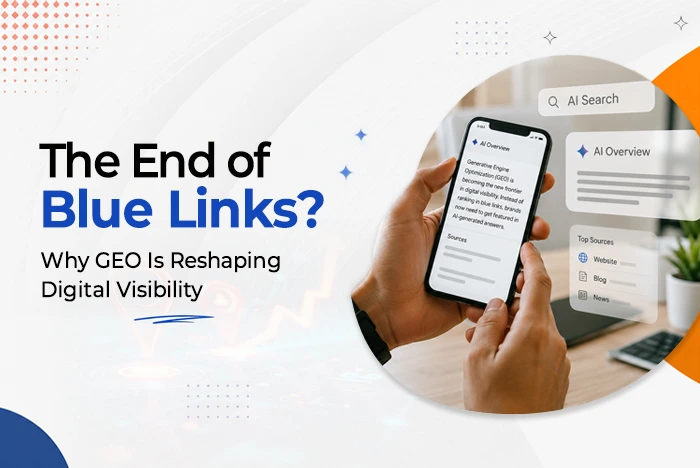
Generative Engine Optimization (GEO) is the practice of optimizing content so that it can be more easily understood by a generative search engine, trusted by a search engine, and referenced by a search engine in its responses to queries. As more users use AI-powered search engines to get information and recommendations, making
As opposed to the many decades of SEO that have been concentrated upon the goal of the highest ranking in the search results (where links to a website’s pages are presented in blue links across the results pages), in this new framework visibility in search results is also increasingly being concentrated upon as a goal.
Why Blue Links Are Losing Attention
- Users Want Instant Answers
Searching is evolving. As AI-powered search tools such as Apple’s Siri, Microsoft’s Bing AI and Google’s own answer box become more prevalent, the way that users interact with search results is also changing. A growing number of users are conducting searches that are
- Conversational Search Is Growing
The way people enter search terms is evolving toward searching as they would ask a question. Therefore, the content needs to be optimized for the intent of the person conducting the search.
- AI Chooses Trusted Sources
These models prefer to select the most credible, authoritative, and structured sources of information for their generated answers.
- Rankings Alone Aren’t Enough
Ranking high in search engines (Google) is not the same as having digital visibility. If the search engines for answer services do not refer to your content, then your content is not visible to users as well.
- Brand Mentions Drive Visibility
Businesses that consistently produce high quality, trustworthy content about their experiences with GEO are likely to have their content cited by the answers generated by AI search engines.
How GEO Helps Businesses Stay Visible
- Builds Authority Across AI Platforms
In addition to helping a company maintain rankings in search engines, the AI search engines prioritize content from credible, authoritative, and well-structured websites.
- Aligns ContentwithUser Intent
By GEO we mean that the content of a website focuses on answering questions that potential visitors would in fact pose, thus making the content more useful not only to potential visitors of that website but also for AI systems like AI search engines.
- Improves AI Discoverability
Investing in AI search optimization services for business is key. By doing so, you can make sure that all your web pages are properly indexed and can be retrieved by various AI search engines. The results then can be used to provide recommendations, summaries, or even answers to users’ queries.
- Creates Long-Term Competitive Advantage
The advantage that a business with authority in AI has today will have over competitors in the future’s search experiences via AI.
The Role of LLM SEO in Modern Search
- Content Structure Matters
Organize your content into clear headings and short, to the point of paragraphs. A logical structure to your content will mean that AI search engines can very quickly get to grips with the information contained on your site about your brand. This will mean that your brand will receive more references in AI-generated answers.
- Building Topical Authority
Create valuable content around the related topics of your industry. Building up topical authority on your industry by publishing a consistent stream of high quality; expert content will increase the chances of your content being recommended by AI search engines.
- Optimizingfor User Intent
Match the user’s intent. Instead of trying to rank certain keywords in search results, focus on creating content that will answer customers’ questions. That content will then be featured in search results generated by AI to match the user’s intent behind their search terms.
- Strengthening Trust Signals
Highlight customer reviews, case studies, certifications, etc. and expert insights on a topic and other information that would show authority on a subject. These are known as trust signals, and AI search engines look for strong trust signals on a particular topic to increase visibility in search results as well as answer engines.
A few days ago, SparkToro published an analysis of Google search results for 2026 based on Similarweb clickstream data. They found that 68% of Google searches will eventually fail without a click. The reason for this is that the user has already found the answer to their question(s) on the search results page or in an AI generated summary of the page(s).
CASE STUDY
Our testing on over 25 sites in SaaS, education, and B2C/B2B services found that Search results generated by AI often followed a similar pattern. Those pages that were optimized for entities, FAQs, and topical clusters (or AI-Optimized Pages) were most frequently cited in the Search results generated by ChatGPT for corresponding Search queries as well as in the Google AI Overviews for the same queries.
We found on many of the GEO test queries that we ran sites that were structured around clear entities (such as entities for FAQ’s or topical clusters) were cited in the AI generated response even though the sites in question weren’t ranking in the top 3 for the corresponding Google search query for that GEO. In fact the corresponding pages of copy that were keyword optimized but lacked corresponding structure and authority signals were frequently not cited in AI generated search results.
AI search visibility isn’t just tied to your traditional SEO rankings on search. Your content’s clarity and structure, and more importantly your website’s authority signals play a huge role in whether you get cited in AI generated search results.
Why do Businesses Need GEO in 2026?
The rise of AI search doesn’t mean SEO is dead. It means SEO is evolving.
The Business that Focuses Only on the Rankings is Losing Opportunities with AI Search.
There is value in helping businesses to improve their search performance so that they can get visibility in the new generation of generative search engines. That is what a GEO agency can do for you. They can helpeate content of value around the topics of interest to your industry. And that content will gain topical authority, which will then be recommended by the new search engines repeatedly.
On the other hand, there are also generative engine optimization services which will support the SEO company by generating additional visibility with all search engines as well as answer engines.