Did you know that Technical SEO delivers a 117% average ROI and breaks even 33% faster than content marketing. Yes, it does!!
In a world surrounded and embraced by SEO and AI, do you know which is the most undervalued thing today? GEO SEO? No! It’s technical SEO, and one cares about it only when something breaks!
And when it breaks, nothing remains!
Everything starts falling, rankings disappear, pages drip out of the index, traffic starts being dramatic overnight, and the only thing that remains is you and your eyes staring at the Google console, with a perplexed face, wondering what went wrong. And the answer lies somewhere concealed in your site’s backend, which is obviously unfavorable.
But don’t worry, we are here to help you rebuild again, by offering advanced SEO services and advanced technical SEO to keep your site crawling.
The truth is- The battle is always between content and search engine crawlability. Having the best content on your website doesn’t matter if search engines can’t crawl, index, or contribute properly.
This is what Technical SEO is all about; it’s the foundation of what you are doing behind the scenes to keep your site up and traffic coming.
1. Content Strategy
2. Link Building
3. On- Page optimization
All of the above entirely depends on a structured and clean technical SEO setup.
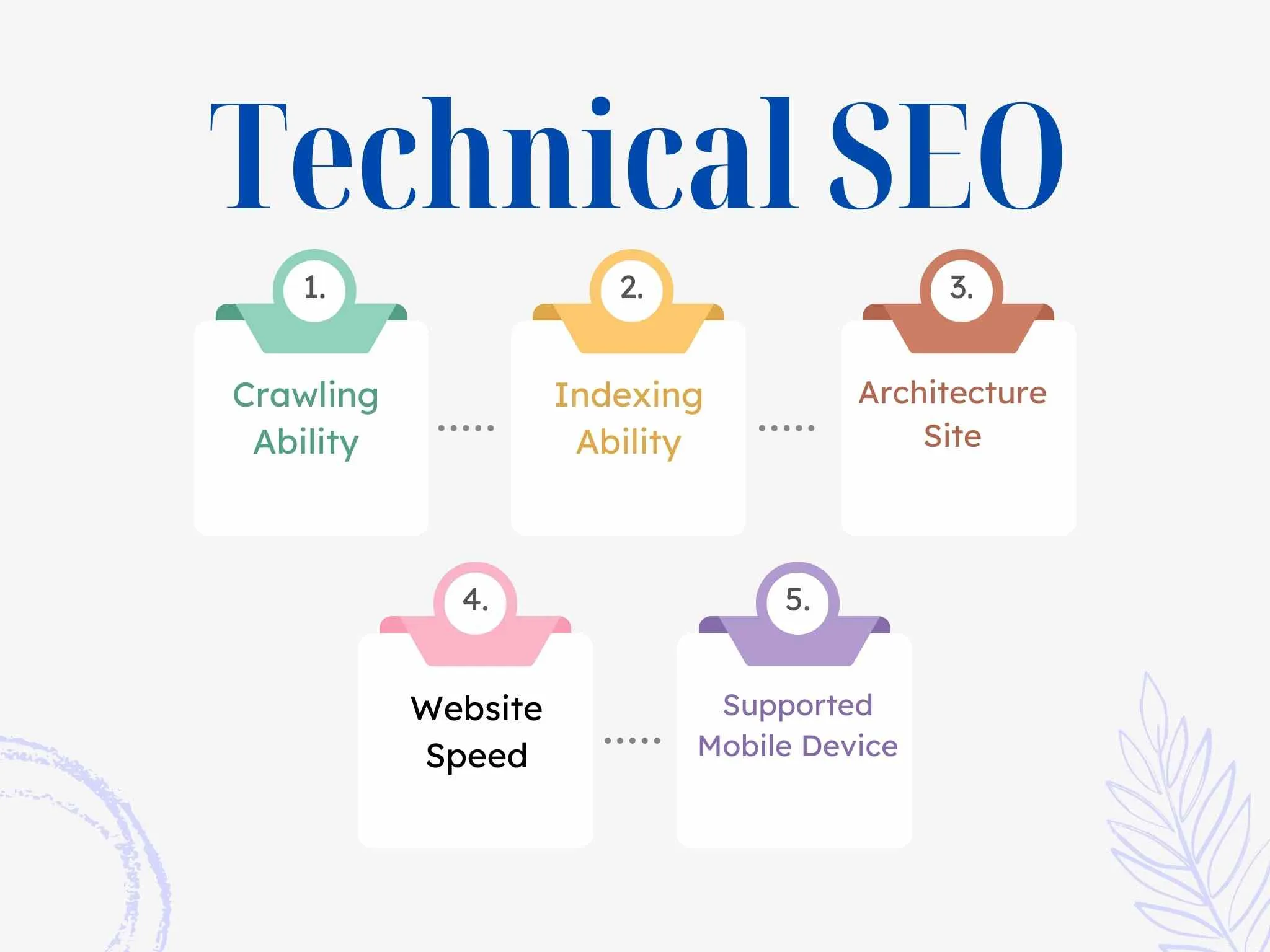
Why is Technical SEO the foundation in 2026?
Things have changed in 2026; search engines are no longer about crawl and rank, the way they once were. Now they predict, interpret, and validate the content across AI answers and multimodal
SEO isn’t what it used to be. “Content is king” still matters in 2026, but there’s a twist: machines need to understand your content just as much as humans do. Technical SEO has gone way too far from fixing, cleaning up code, and fixing broken links. Now, your site needs to perform well in the augmented world, send strong trust signals, and be easy for humans and AI to understand.
If you want your brand to show up in AI Overviews, be cited by AI, and ranked high on Google, your site’s technical foundation has to be perfect. Here’s how to make that happen.
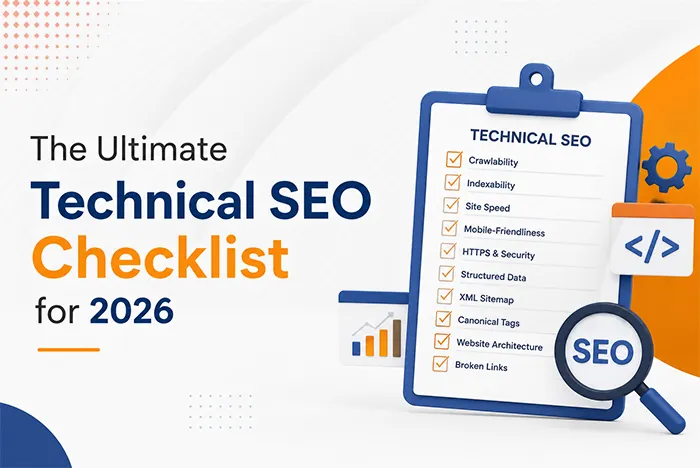
1. The Crawlability Matters
Are you ready to face the fact that search bots in the present world are mini-AI evaluators? Indeed. Let’s face it, because they don’t simply crawl the pages, but also assess whether the content is authentic and useful.
What is required?
Server-Side Rendering- SSR, or dynamic rendering, is a must. If your pages rely on JavaScript, make it simple for bots to see your content, or they will just discard it
Clean up XML Sitemaps-so bots get To get your site’s structure right via bots, segregate your sitemaps by content
Search engines judge your site’s crawl budget based on perceived quality. If you have junk pages, bots won’t do the hard work to find your treasures.
2. Indexing Signals
Indexing is intelligent these days. The quality of individual sections is judged by AI, for example, thin areas on your pages, which can get skipped even if the page itself is indexed.
Here’s how to be considered
Implement canonical tags so engines know which page version is the real entity.
Checking the search Console is mandatory. Because Google might ignore sections because of quality or layout issues.
Have a quick run for pages that exist just for internal links and offer nothing authentic. Either work on it by enhancing it, or use no index.
3. Core Web Vitals
Performance isn’t just about hitting the goals and objectives; it’s about delivering a flawless user experience live while people are on your site.
Target for:
- LCP -Largest Contentful Paint-The smart act here is to keep it restricted under 2.3 seconds. And guess what, your hero image or main headline loads fast!!
- INP –Interaction to Next Paint– it’s the key metric for responsiveness. The trick is to stay under 200ms.
Do you want buttons jumping when someone tries to click? Definitely not! Hence, stamp out layout shifts.
4.Structure Based SEO vs Keywords
Keywords aren’t the thrillers anymore! Search engines are no more a single game of keyword density, but it’s more about site authority now. Don’t move out random blog posts. Build content clusters around your main and existing ones.
If you do organic SEO, cover everything from local to technical audits. Keep your NAP and mission consistent everywhere.
5. Authenticity, Security & Trust
Trust is a ranking factor and is undeniable too! Search engines look for evidence that your site is legit and is operated by humans and not chatbots.
The Checklist:
- HTTPS- Images, and scripts need to load securely.
- Bot Net-Use latest tools to keep spammy bots from scraping your site and injecting copied schema.
- Transparency-Display ownership, contact info, and your editorial policies, secure transparent sites are more likely to get cited by AI search engines or models.
6. AI Readiness and Machine Extractability
Want to be the source of AI references? Make your content easy for machines to capture by implementing the following:
- Answer your important question in the first 2–3 sentences.
- Structure with tags that make your outline clear- (H1, H2, H3)
- HTML tables enable bots to compare and understand your info.
- Use Bullet Points, they make parsing information fast for machines.
7. Mobile Experience: The real game changer
Desktop indexing is now no longer the center stage, because mobile comes first. Parity-All content, links, and schema on desktop should appear on mobile. Foldable & AI Devices. Test your site on different aspect ratios and voice interfaces. Your UX needs to be flexible.
Summary
Well, surviving in the AI-driven era is like living on the edge of competition, and the shift towards machine readability and entity-based authority is a clear sign that html technical SEO in 2026 remains in the spotlight for visibility.
By implementing clean crawlability, core schema markup, and ultra-fast performance, websites signal that they are not indexed by Google but cited by generative AI engines. Ultimately, upkeeping a flawless technical infrastructure is the only way to safeguard authority and traffic in the world of automated search.
If you want help navigating all this, we are here. Our SEO company specializes in advanced technical SEO and organic SEO services to help you stay ahead in the era of AI search. Interested?
Reach out for a full technical audit