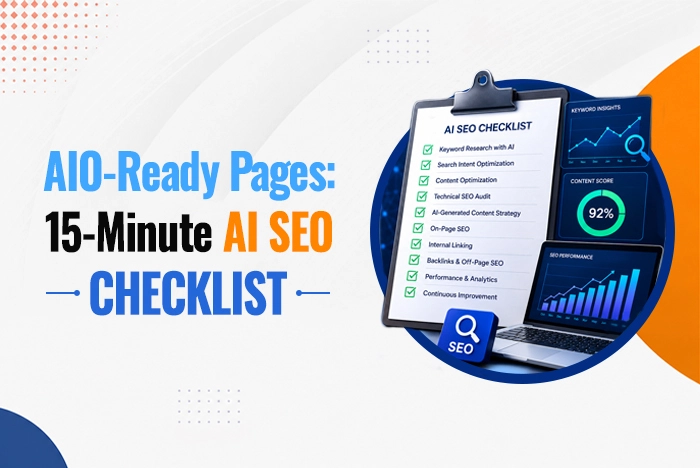
Key Takeaways
- Need to create AI-ready pages: clear answers, readable content, and accessible website.
- Technical SEO, good page structure with proper headings, correct use of schema and high quality / trustworthy content all help AI systems to understand your pages.
- Checking for these issues before you start producing more content will help to highlight any problems with your current page.
Introduction
Just because your page is ranking in search results doesn’t mean you’re taking full advantage of it. This could be because your content is not easy to read and/or not easily accessible by AI-powered search engines.
There are a number of services including an ai seo service and answer engine optimization service that can help you to understand where you fall short and then provide the necessary guidance to ensure that your content is presented in the best possible light in search. Even a top local SEO company can benefit from running these checks on behalf of their clients.
What Does AIO-Ready Mean?
AIO-ready indicates that a web page is accessible and understandable for search engines and AI-based technologies, which provide answers to queries that were made by users online. It is the right combination of solid technical SEO and nice content organization.
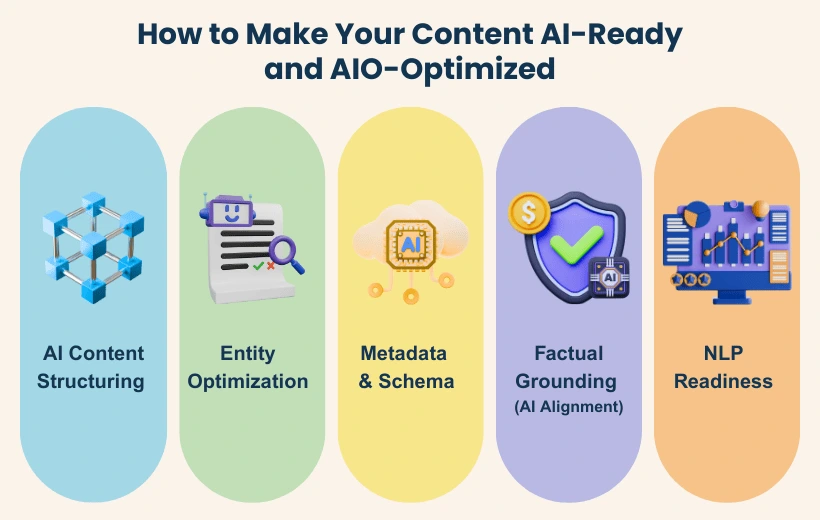
The Google AI Overview generates answers from multiple sources. Your web page delivers a clear and relevant topic with coherent claims, and it facilitates the retrieval of key information. There is no way to guarantee that your content will be in the Overview, but eliminating the unimportant details makes it stronger.
Your 15-Minute AIO Readiness Checklist
1. Check Your Page Access
Duration: 2 minutes
First, it is essential to be sure that search engines can view your content. If significant information is blocked or not reachable, then even quality and perfect content would not show up in the search results.
Look into the following points:
- First, open an incognito tab in the browser.
- Look for no index tags that might be present by mistake.
- Check the robots.txt file and ensure it does not prohibit access to pages of major value.
- Confirm whether the server responds with normal HTTP responses.
- Make sure the right URL has been entered.
Finally, don’t forget to check the XML sitemap and canonical tags, as this always helps to let search engines discover your URLs and also understand which version of the page is to be indexed.
2. Make the Main Answer Clear
Time: 2 minutes
Make the principal answer appear at the start of the relevant section so that the readers shouldn’t have to go through a lengthy introduction in order to know what your web page is about. An instance of that is a heading that reads, “What is Local SEO?” The paragraph that follows should contain a simple definition of local SEO, then give some explanations, examples, and practical advice.
Use clear H2 and H3 headings; avoid long paragraphs formed around one thought, but never forget about having logical opening paragraphs that should stand out from the preceding sections.
3. Review Your Content for Gaps
Time: 2 minutes
Is your content comprehensive enough for a reader to make a decision based on the page? Are readers’ questions answered on the page?
Fill in the missing definitions. Clarify unclear steps. Remove outdated information and avoid unsubstantiated claims. Use examples to explain complicated points and make the information more comprehensible.
An ai seo service can be useful in determining the search intent of your content and completing any missing topics. Note, however, that your aim is to help the reader, not write Garbage for the search engine spiders by overloading with keywords and then trying to make that look more intelligent by using very technical language in all of your sentences.
4. Check Your Headings, Links, and Page Structure
Time: 2 minutes
A well-organized page is important to readers and search engines, helping them understand the content of a page.
Use descriptive headings and internal linking to help users and search engines understand your page’s architecture and find other relevant content on your site. Ensure all links are active and lead to relevant information.
Try to avoid links that are not working and any kind of confusing navigation. Also, be aware that a page with many unrelated subjects might be better split up into several single pages.
5. Review Schema and Page Details
Time: 2 minutes
Structured data on a page, such as an FAQ, helps search engines understand specific details about the page. Make sure you have included relevant and valid schema on your page that also conforms to the visible content on the page.
For such structured data on a webpage, the following schema types can be suitable: Article, Organization, LocalBusiness, or BreadcrumbList. (Besides FAQ schema, which can be used in your FAQs if you think it is relevant and search engines support it in current search updates.)
Look for page title, meta description, canonical URL, all image alt attributes, and author for accuracy and relevance. Structured data (schema) to aid search engine understanding of the page does not guarantee an AI citation.
6. Verify Credibility and Up-to-Dateness
Time Required: 2 minutes
Building trust among your audience is key to their acceptance of your statements. You can do this by introducing real authors and providing reliable references whenever applicable.
It is necessary to update or eliminate old content to ensure it is accurate and consistent with modern realities. In the case of local businesses, their name, address, and phone number should be stated identically everywhere.
A top-rated answer engine optimization service should additionally evaluate content quality and measurable accessibility of the website as well as the reputation of the brand.
7. Test the Page in AI Search
Time: 3 minutes
Ask some actual questions that your audience would like answered, and check out the possible queries in Google AI Overview or similar AI tools to see which sources are presented.
Uncover if your brand is mentioned, if your URL is referenced, and if competitors provide clearer answers. It is important to repeat this check regularly, as AI can produce different results every time you conduct the test.
| Check | What Good Looks Like |
| Page access | Important content is crawlable |
| Content | Direct answers and useful details |
| Structure | Clear headings and relevant links |
| Trust | Accurate facts and real authorship |
| AI visibility | Relevant mentions and citations |
What If Your Page Still Does Not Appear?
If your page checks all the boxes but is still nowhere to be found in AI results, do some research on the competing pages and what questions they provide an answer for trying to figure out if you offer something in your content that is not included elsewhere.
An ai seo service can help identify technical issues and content gaps. A top answer engine optimization service will enable you to develop a strategy for improving AI visibility, and a top local seo agency will be able to analyze both local relevance and company information.
Don’t start making significant modifications based on one prompt. Rather, look for trends and apply fixes that also enhance user experience.
Make Your Website Ready for AI Search
Make your website AIO-ready! Ensure that your accessible pages contain direct answers to user queries and useful content, and also that you deliver reliable information to enhance your website’s potential in search. For a practical search strategy and effective SEO services, speak to the e intelligence digital marketing services team.