Key Takeaways
- GEO performs best when clear answers are provided in content that can be read by AI and cited accordingly.
- Strong SEO, solid brand mentions, and relevant topics are key to getting noticed by AI engines.
- Measure brand mentions, citations, relevant visits, and leads instead of measuring only clicks.
Introduction
Your GEO strategy may not be working even after you published valuable content, and your brand is not listed in answers from AI tools like ChatGPT, Gemini, or Perplexity. Generative Engine Optimization (GEO) is different from Search Engine Optimization (SEO) and helps your brand appear in answers from AI tools.
In order to make your content more readable for AI tools, you need generative engine optimization services. In order to improve your search engine visibility, you need search engine marketing agency services. In order to perform ChatGPT marketing services and support your GEO strategy, you need ChatGPT marketing services.
Understand What GEO Results Mean
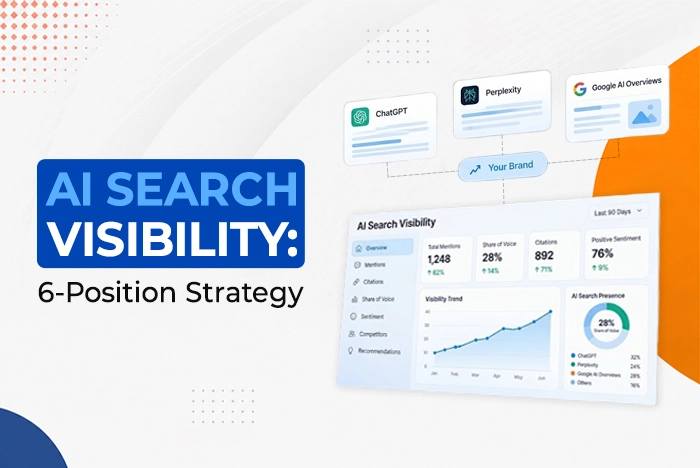
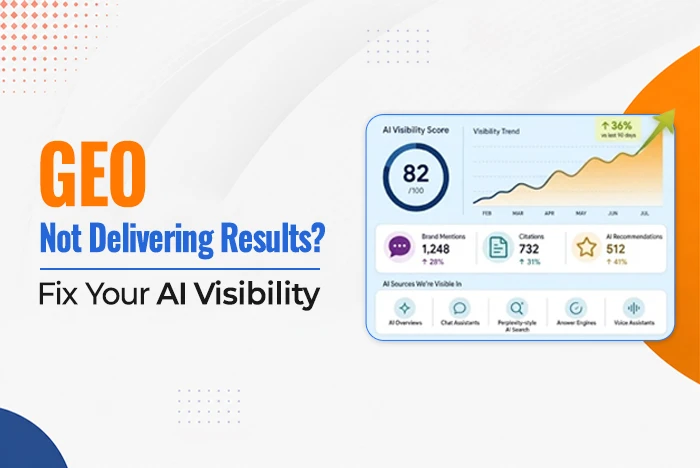
Generative engine optimization (GEO) allows your brand to show up in the responses produced by search engines based on AI technology. These replies from the engines include the following: recommendations, citations, mentions in responses, and the number of visits coming from AI referrals.
To check your success, figure out various metrics based on what you want. When it comes to visibility, look for mentions of your brand in the responses of AI-powered search engines. When it comes to revenue, observe inquiries and conversions as well. Note that a low number of clicks might not mean that you did not have impact, but visibility without value needs to be assessed.
1. Make Your Content Easy to Understand
AI toolsets require accurate information to identify and retrieve valuable responses. Too long of introductions, too general of headings, too many integrated ideas within one text section can obscure your main idea.
Address your audience’s principal question near the beginning, then clarify it in an easy-to-digest way. Descriptive headings, paragraphs and examples. Avoid assuming your audience is familiar with terms; rather, define them.
The purpose of the service page is to tell your readers about your offer, the individual for whom you provide it, and why it is unique.
2. Cover Your Main Topic Properly
There’s no single blog post that will answer all of the questions of buyers. Create related pages of regular issues, comparisons, and users of the different questions raised prior to buying.
Naturally connect pages and ensure that they are not redundant. This helps to develop a topically relevant reputation.
The generative engine optimization strategy ought to include an assessment of existing content, inventory, and gaps in the answers, along with the provision of solutions to fill the gaps. The more pages, the more isn’t necessarily superior. It is far more important to get coverage that is relevant and helpful than it is to be copious.
3. Answer Real Customer Questions
Take advantage of customer emails, sales calls, and search queries to understand the in-depth questions that users pose to AI services and how your audience can be assisted by them.
Use the questions as headings to outline the potential providers, what to look for, and what to avoid. Avoid forcing in keywords.
Answer specific questions on increasing visibility in AI search instead of answering with general terms.
4. Build Trust Around Your Brand
The consistency of business information, author information, reviews, and trusted industry mentions are all key to AI visibility. Ensure that information about the business is correct, include true information about the business owners, and back it up with examples or references to substantiate claims. Request feedback and provide knowledge on trusted sources. Do not make fake reviews.
A familiar mark provides people with an explanation to remember you and gives the AI methods more context.
5. Combine GEO With SEO
GEO and SEO must complement each other. Problems such as non-working links, poor page titles, or pages that cannot be found by search engines can reduce visibility.
Search engine marketing companies can analyze organic and AI visibility simultaneously. You need to verify the crawling capability of your page, its title, headings, and internal links. Structured data helps to explain the page to a certain degree, but does not warrant any mentions from AI.
It is necessary to find out if your page is crawlable by AI crawlers. Make SEO your primary focus.
6. Refresh Content and Track Progress
Outdated details, broken links, and poor arguments are negative factors for any page. Important pages have to be updated, important answers provided, and pseudoinformation removed.
|
What you notice |
What to check |
|
AI rarely mentions you |
Test buyer questions and review brand signals |
|
Pages get little engagement |
Improve clarity and search intent |
| Content feels incomplete |
Add detail and link related pages |
| Visits do not lead to enquiries |
Review calls to action |
Reproduce the same content on different AI platforms at intervals. Log the references, terminology, competing websites, and conversion rates. Answers might differ, so only one attempt will not suffice.
With regard to ChatGPT services, check user messages to see the behavioral trends.
7. Know When to Get Expert Help
Also, check access to the content, the gaps between the topics, and the mentions of your brand that have not led to any change after optimization.
The provider of generative optimization services must provide sufficient information on the audit, on the methods of evaluation used, and on their point of view. He must not promise any kind of mentions or rankings.
Be sure that your PPC service is also aligned with your content and business objectives.
Fix the Gaps Before Publishing More
Get your website up to speed – clear, useful, trusted and easily found. Tackle content, brand signals, technical SEO and measurement in turn to create areas of improvement for your GEO strategy.
For support and guidance on these emerging areas of Generative Engine Optimization (GEO), see e intelligence. Also see search engine marketing agency services and ChatGPT marketing services as part of a more strategic approach to Search and AI Visibility.