If you desire to post your site on Google, then think about SEO. SEO is an acronym that stands for Search Engine Optimization. It suggests improving your website with the company of a search engine. AI advanced SEO services fastens the process of SEO in today’s context. However, how can you be certain whether your SEO is successful? Here come benchmarks.
Benchmarks are similar to test scores. It compares your performance with others to show you, or it compares your performance over time. This blog is all about the most important benchmark metrics for ai seo services and how they work in creating your website.
Why Traditional SEO Metrics Are No Longer Enough
AI SEO benchmarks measure SEO performance. Consider it a report card. AI SEO benchmark acts as a teacher who grades your website for performance like you would in a school exam.
AI systems can analyze many hundreds of benchmarks at once. They look at what’s on your page, other pages you’ve linked to, the performance of your page, and other content features. They inform you whether it is working well or not. This will help save time and aids in decision making. Generative engine optimization (GEO) is the field that fills this need. Not only search engine crawlers but also AI systems should be able to understand, cite, and trust your content.
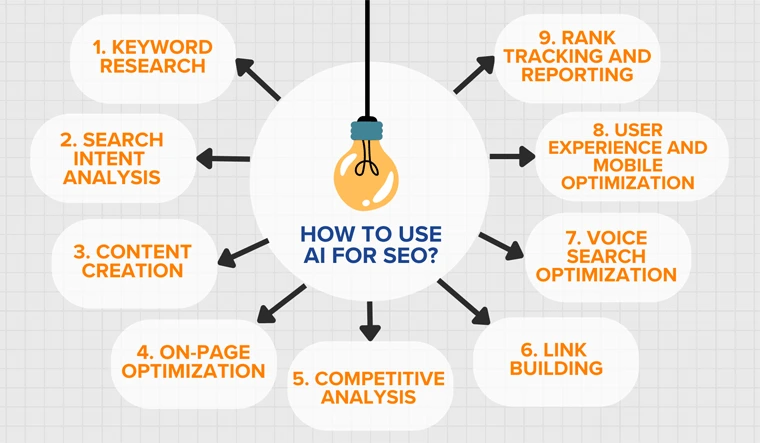
The Key AI SEO Benchmarks to Track
Here are some key AI SEO benchmarks to track:
1. Organic Traffic
Web traffic that comes from a search result as opposed to an advertisement is defined as “organic traffic. One of the most vital SEO factors.
Tools such as Google Search Console, SEMrush, and Ahrefs track organic traffic on a daily basis when using AI.With AI, tools like Google Search Console, SEMrush, and Ahrefs can track organic traffic daily. They inform you of mmm and the sites they vary, as well as the key phrases they entered into search engines.
The method of evaluation: Compare the organic traffic collected on a monthly basis. If you’re seeing an increase, then SEO is working. If it doesn’t stand or flatten (or both), there must be a change. First, build up by 10% each month for organic.
2. Keyword Rankings
Google keywords are words or phrases that are typed in. Some keywords that are used are “best running shoes for kids”. Your keyword ranking tells you the position at which your website appears when people search for your keyword.
You will get a few clicks in Google page 1 (1–10 search results). People won’t visit your site if it’s on page 2.Your site won’t get any visitors if it’s on, say, page 3.
AI has the ability to track hundreds or thousands of keywords at one time. They indicate an increase or decrease in ranks. They also suggest you to target some new keywords.
Evaluation: Note the number of terms you are in the top ten. Look at whether there were more or fewer keywords that increased and decreased last month. The top 10 should be built up over a period of time.
3. Click-through rate
To know how many clicks you’ve received on your link in the search result, review your CTR. What is the percentage of CTR (Click-through rate) if 100 Google users viewed your site and 5 people clicked your website that is 5%?
The more that your title and description draw interest, the higher your CTR will be. Having a low CTR might indicate that visitors are looking at your page, but they have not yet clicked.
With the arrival of AI, the creation of title and description for clicks can be enhanced. They are able to measure industry page success and suggest enhancements.
The goal is to get a high CTR, according to Google’s top position just averaging at 28-30% CTR. Positions 2–3 decline to 10–15%. If the CTR is low for your position, then try re-writing your title and description.
4. Bounce Rate
Your bounce rate is the number of people leaving your website after viewing just one page. Some visitors may be arriving to your site looking for what you don’t have.
Imagine someone visiting your website who is a dog foodie. The purpose of your site is cat food. They depart immediately. That bounces.
AI tools can assess your bounce rate and find the reasons why people are leaving your website. They also can give tips on how to better your content.
Evaluation criterion: If bounce rates are less than 40%, it is excellent. The average is 40-60%. There might be an issue with the page above 70%. Clarify and enrich content.
5. Page Speed
Website page speed is its loading speed. People dislike waiting. Visitors will not bother to read if your website loads more than three seconds. Google also measures speed of sites too.
The AI systems such as Google PageSpeed Insights or Lighthouse will rate websites with 0-100 points. They additionally uncover what is holding back your site and how you can take care of it.
Evaluation method: The scores for mobile and desktop must be +90. Work on your score below a 70 before working on additional aims. Faster pages are better rank and please visitors.
6. Backlinks
Links that point back at your site from other sites. The vote is a time of trust. The more excellent websites that link to your site, the more your site is seen as trustworthy and having value to Google.
AI tools analyse and calculate backlinks. They can also recognize whether or not there are spammy back links affecting rankings.
Evaluation method: See how many backlinks you’ve received each month. Check the links’ quality. People are more likely to click on a link from a trusted website than one from an unknown website. Work on obtaining some quality backlinks each month.
7. Content Quality Score
Use AI technologies to read and grade your work. They assess whether it deals with a topic, does not have a lot of text, addresses common questions, and is comparable to leading sites.
One most interesting of the new benchmarks. Clearscope, SurferSEO, and MarketMuse analyze and give recommendations to improve content with the help of artificial intelligence.
How you will evaluate: Applying an Artificial Intelligence Content Tool on key pages. To obtain a maximum mark for a topic. Add missing parts, update titles and respond to audience questions by following these ideas.
8. Website Essentials
Google Core Web Vitals are metrics that are three in all, unique metrics to examine the act of a website being usable. They measure the LCP (loading speed of the primary content of the page), the stability of the page (CLS), and click response speed (INP).
The results you get in search engines depend on the official Google ranking signals.
Evaluation method: Free Google Search Console allows Core Web Vitals to be shown. Identify “Poor” pages and make first repairs. Mark all the pages as “Good”.
How GEO Services Can Help You Reach Your Goals
It’s not a one-time thing to improve your AI SEO benchmarks; it’s a long-term process of technical SEO, content optimization, and building authority. You can use GEO services and generative engine optimization services to help with that.
These things make up a good GEO program:
- Structured content creation that is meant to directly answer AI questions
- Schema markup and technical SEO can help AI read your site better.
- Signs of authority include high-quality backlinks and brand mentions.
- Regularly keeping track of benchmarks to see how things are going and make changes
Brands that put money into this now, while the rules are still being worked out, will have a big advantage as AI search grows.
Start Tracking What Really Matters
There will always be value in the old-fashioned SEO metrics. But you should also check how visible you are in AI search. If you don’t, you could miss out on one of the digital marketing channels that is growing the fastest.
It’s easy to see how you stack up against your competitors with AI SEO benchmarks. This helps you figure out where to focus your efforts. The data is what makes the difference between guesswork and strategy, whether you’re just starting out with AI search optimization services or expanding a program that you already have.