SEO has changed significantly since 2023. Artificial intelligence, evolving Google search experiences, changing user behaviour, and stronger spam detection have changed how businesses approach online visibility.
But let’s be honest: not every SEO trend deserves the hype it receives.
Some strategies remain essential, some need a modern approach, and others were misunderstood from the beginning. From AI-generated content to backlinks and voice search, it is time to separate effective SEO practices from marketing myths.
At e intelligence, we believe sustainable SEO is about more than following trends. It requires a clear strategy, helpful content, technical excellence, and a genuine understanding of what your audience needs.
Ready to improve your search visibility? Explore our SEO services to discover how a strategic approach can support your business growth.
Roasting Popular SEO Trends
Google continuously improves its ranking systems to provide useful, relevant results. However, there is no single trick that guarantees higher rankings.
Let’s take a closer look at popular SEO strategies, what people often get wrong about them, and how businesses should approach them today.
1. Voice Search: Still Waiting for the Revolution?
Voice search allows users to search through smartphones, smart speakers, vehicles, and other connected devices. It can be useful when people want quick answers, directions, business hours, or information while on the move.
Businesses can prepare for conversational searches by answering common customer questions, using clear language, maintaining accurate business information, and creating pages that address specific search needs.
However, there is no special voice-search formula that guarantees a top Google ranking. Many of the practices associated with voice search are simply good SEO.
ROAST: Voice search has been called the next big thing for years. Yet marketers sometimes spend more time predicting its future than improving the content customers already use.
What actually works? Write naturally, answer questions directly, and make your website useful on every device. Do not create a separate voice-search strategy unless it serves a clear business objective.
2. Old Link-Building Tactics: Quantity Over Quality Is Out
Backlinks can help search engines discover content and understand relationships between websites. Relevant links from reputable publications and industry websites can also introduce your business to new audiences.
But not every backlink is valuable. Mass directory submissions, paid links intended to manipulate rankings, automated link schemes, and irrelevant forum links are not reliable shortcuts to SEO success.
A better strategy includes publishing original research, creating useful resources, contributing meaningful industry insights, and earning links through legitimate digital PR.
For businesses seeking a structured approach, our SEO agency can help identify opportunities to improve organic visibility through sustainable optimization.
ROAST: If your entire link-building strategy is based on collecting as many backlinks as possible, congratulations: you have built a spreadsheet, not necessarily a stronger website.
What actually works? Focus on relevance, editorial value, and genuine relationships. Review your backlink profile, but do not assume every low-quality link will harm your website or requires a disavowal.
3. IndexNow: Faster Notifications Do Not Guarantee Google Indexing
IndexNow is an open protocol that allows participating search engines to receive notifications when website URLs are added, updated, or deleted. It can help participating search engines discover changes more efficiently.
However, IndexNow is not a universal indexing tool, and submitting a URL does not guarantee that a page will be indexed. Google does not list IndexNow as a supported URL-submission method.
For Google, use an accurate XML sitemap, crawlable internal links, and Google Search Console’s URL Inspection tool when appropriate.
Make sure important pages return successful HTTP responses, are not unintentionally blocked, and have suitable canonical tags.
ROAST: Sending a notification and expecting Google to index your page instantly is like sending an invitation and assuming everyone will attend.
What actually works? Make your content accessible, provide clear discovery paths, and monitor indexing through Google Search Console.
4. AI Content: Helpful Assistant or Content Factory?
Artificial intelligence has changed content research, brainstorming, outlining, editing, and optimization. It can help marketing teams work more efficiently and identify useful topics.
However, publishing large quantities of generic AI-generated articles without meaningful review or original value is not a sustainable strategy.
Google’s policies focus on the quality and purpose of content, not simply whether AI was involved in its creation. Content produced using AI can perform in Search when it is useful, accurate, relevant, and compliant with Google’s guidelines.
Businesses should use AI to support human expertise rather than replace editorial judgment. Review factual claims, add original insights, include relevant examples, and ensure each page answers a genuine audience need.
For more information, read Google’s guidance on generative AI content.
ROAST: Publishing 100 AI-generated articles in a day does not automatically make you an industry authority. It might just give your editorial team 100 articles to fix.
What actually works? Combine AI-assisted efficiency with human review, subject knowledge, accuracy, and original value.
5. Passage Ranking: Stop Treating It Like a Secret SEO Trick
Google can understand and rank relevant passages within pages. This helps its systems identify useful information even when it appears within a larger article.
However, passage ranking is not a separate optimization technique that requires special tags or a dedicated SEO campaign.
The practical lesson is straightforward: organize content logically, use descriptive headings, answer specific questions, and make important information easy to understand.
A well-structured article should help readers find answers without forcing them to navigate through unrelated information.
ROAST: You do not need to hide a secret keyword formula inside every paragraph to help Google understand your content.
What actually works? Create comprehensive, well-organized content that serves a clear purpose. Use headings to improve readability, not simply to insert more keywords.
6. YouTube SEO: Uploading Videos Is Only the Beginning
Videos can help businesses demonstrate expertise, explain complex topics, answer customer questions, and reach audiences through Google Search and YouTube.
However, uploading a video does not guarantee that it will appear in a search carousel or receive significant traffic.
Effective video optimization starts with understanding what your audience wants to watch. Create useful videos, write accurate titles and descriptions, use relevant thumbnails, and provide captions where appropriate.
If videos are embedded on your website, make sure the relevant page is accessible and the video can be discovered by search engines.
Explore our web development services if your website needs improvements to its content presentation, performance, or technical implementation.
ROAST: Adding a keyword to a video title and hoping for thousands of views is not a video marketing strategy. It is wishful thinking with a thumbnail.
What actually works? Focus on useful videos, clear presentation, audience relevance, and consistent measurement of views, engagement, and meaningful website visits.
7. Mobile Optimization: Still Essential, Not New
Mobile usability is no longer an emerging SEO trend. Google primarily uses the mobile version of a website’s content for indexing, making mobile accessibility an important technical consideration.
A responsive website should present its main content clearly across devices. Navigation should be easy to use, buttons should be accessible, and important text and images should load correctly.
Businesses should also monitor Core Web Vitals and overall page experience without assuming that a perfect performance score guarantees higher rankings.
ROAST: If your website still requires users to zoom in, struggle with tiny buttons, or wait endlessly for a page to load, you do not need a new SEO trend. You need a better website experience.
What actually works? Test important pages on mobile devices, review loading performance, fix usability problems, and make essential content available on both mobile and desktop versions.
8. Generative AI Search and GEO: Visibility Beyond Traditional Rankings
Search experiences increasingly include AI-generated answers and conversational interfaces. Businesses are therefore exploring how their information can be discovered, understood, and referenced in these experiences.
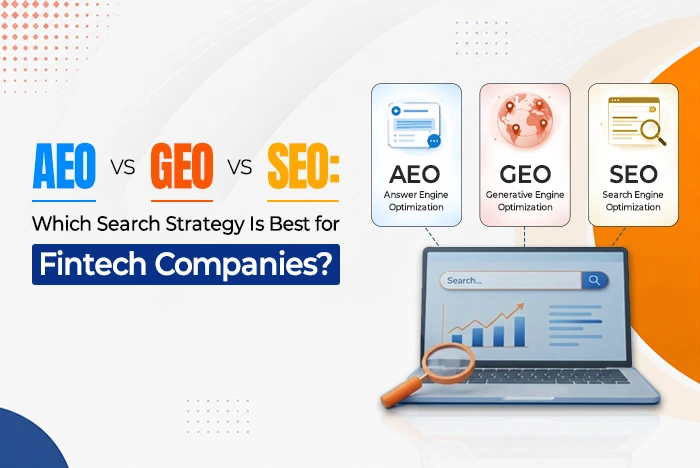
Generative engine optimization (GEO) and answer engine optimization (AEO) describe approaches intended to improve visibility across AI-powered search and answer experiences.
Useful foundations include original content, clear explanations, accurate business information, accessible pages, and credible supporting sources. Structured data can also help search engines interpret eligible content when implemented correctly.
However, no agency can guarantee that a business will be recommended by a particular AI platform. There is also no separate secret set of GEO tricks that replaces sound SEO fundamentals.
Learn more about generative engine optimization services and answer engine optimization services to understand how these strategies can fit into a broader search visibility plan.
Businesses interested in conversational discovery can also explore our ChatGPT marketing services.
ROAST: Adding the words “AI optimized” to a service page does not make a business an AI search authority.
What actually works? Publish useful, original information, maintain accurate brand details, make your website accessible, and measure visibility across the channels that matter to your business.
Why SEO Trends Do Not Always Deliver Results
Even a popular SEO strategy can disappoint when it is applied without understanding its purpose.
Common reasons include:
- Overhyped expectations: Marketers may expect an immediate ranking boost from a tactic that offers only limited or indirect benefits.
- Poor execution: A useful strategy can fail when content is weak, implementation is incorrect, or the website has technical problems.
- Changing search behaviour: Customers’ needs, preferred formats, and search habits evolve over time.
- Algorithm changes: Google’s ranking systems continue to evolve, and rankings can fluctuate as systems reassess content and relevance.
- Lack of measurement: Without reliable performance data, it is difficult to know whether a strategy is producing meaningful results.
Instead of following every trend, businesses should prioritize actions that solve real problems, improve the website, and support measurable goals.
How to Build an SEO Strategy That Lasts
A practical SEO strategy should bring together content, technical optimization, authority, and user experience.
- Audit your website: Identify crawling, indexing, performance, and internal-linking problems.
- Improve existing content: Update outdated information and add useful details where they are genuinely needed.
- Build relevant links: Earn credible links through valuable resources, original insights, and legitimate industry relationships.
- Strengthen internal linking: Connect related articles and service pages using clear, descriptive anchor text.
- Improve mobile usability: Ensure important content and functionality work across devices.
- Monitor results: Track clicks, impressions, conversions, rankings, and relevant AI visibility metrics.
- Review your strategy regularly: Use performance data to decide which improvements deserve priority.
For a more structured approach, explore e intelligence’s SEO services.
Conclusion: Stop Chasing Every SEO Trend
SEO will continue to evolve, but the fundamentals remain important: useful content, accessible websites, credible information, relevant links, and a satisfying user experience.
Voice search, AI-assisted content, video optimization, and generative search visibility can all support a broader digital marketing strategy when they serve a clear purpose. None is a guaranteed shortcut to higher rankings.
The smartest approach is to evaluate every trend critically, test strategies against business goals, and focus on improvements that deliver real value.
At e intelligence, we believe sustainable digital growth comes from combining thoughtful strategy with practical execution. Whether you need technical SEO improvements, content optimization, web development, or a broader search visibility strategy, the goal should always be to help the right audience discover and trust your business.